

Automating NGS prep
NGS
Automating NGS prep

Automating next-generation sequencing (NGS) workflows brings immediate benefits to the lab by increasing consistency, improving reproducibility, and significantly extending walk-away time. This leads to a more robust and scalable workflow that supports high-throughput sequencing demands while freeing up staff to focus on analysis and experiment design rather than repetitive sample prep tasks.

3 reasons to automate NGS prep
Eliminate variability from NGS prep
Control every step of the process—from bead mixing to thermal cycling
Maximize throughput and walkaway time
Coordinate all devices and allow for unattended operation
Ensure complete sample traceability
Integrate with LIMS, enabling bi-directional communication and results reporting




Typical NGS prep workcells
No matter your goals or throughput needs, we can design and implement a solution to automate your NGS prep workflow.
Small workcell
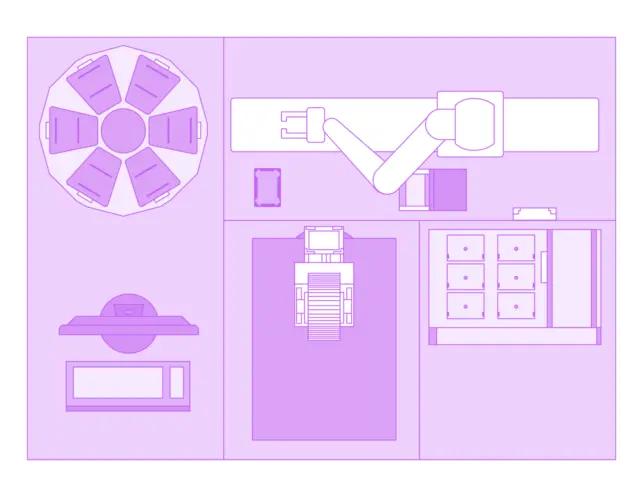
Small workcell
This workcell automates the full NGS preparation workflow, moving plates between devices with a robotic arm for walkaway operation. This integrated system minimizes manual intervention, improves consistency across batches, and allows users to focus on analysis instead of pipetting.
Feature details for Hardware
Hardware:
PF400 on 1M Rail
Agilent PlateLoc
Azenta XPeel
Inheco ODTC
QINSTRUMENTS BioShake
BioTek Synergy HTX Reader
Agilent Bravo
KingFisher Presto
BioNex HiG3 Centrifuge
PAA 6 Position Carousel
Feature details for Software
Integration Software:
Green Button Go
Feature details for Hardware
Hardware:
PF400 on 1M Rail
Agilent PlateLoc
Azenta XPeel
Inheco ODTC
QINSTRUMENTS BioShake
BioTek Synergy HTX Reader
Agilent Bravo
KingFisher Presto
BioNex HiG3 Centrifuge
PAA 6 Position Carousel
Feature details for Software
Integration Software:
Green Button Go
Medium workcell
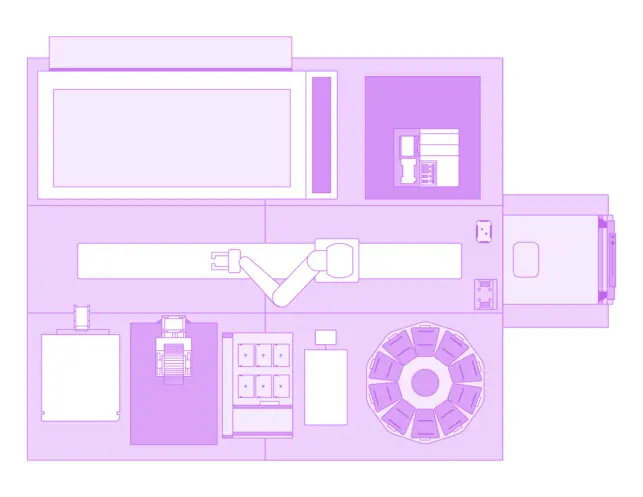
Medium workcell
This high-throughput NGS prep workcell is designed to streamline complex workflows by running multiple processes in parallel. Green Button Go dynamically schedules and coordinates each operation in real time, ensuring that devices are utilized efficiently and that the system responds to timing dependencies or resource availability. By orchestrating this network of specialized instruments, the system minimizes idle time, reduces user burden, and delivers high-quality, consistent libraries—ready for sequencing with confidence.
Feature details for Hardware
Hardware:
PF400 on 2M Rail
Hamilton STAR
Agilent Bravo
PAA 10 Position Carousel
2 TRobot96 Thermal Cyclers
2 KingFisher Prestos
Azenta IntelliXCap 96
Hettich Rotanta 460 Centrifuge
BioTek EL405 Plate Washer
LiCONiC STX44 Incubator
Agilent PlateLoc
Azenta XPeel
Feature details for Software
Integration Software:
Green Button Go
Feature details for Hardware
Hardware:
PF400 on 2M Rail
Hamilton STAR
Agilent Bravo
PAA 10 Position Carousel
2 TRobot96 Thermal Cyclers
2 KingFisher Prestos
Azenta IntelliXCap 96
Hettich Rotanta 460 Centrifuge
BioTek EL405 Plate Washer
LiCONiC STX44 Incubator
Agilent PlateLoc
Azenta XPeel
Feature details for Software
Integration Software:
Green Button Go
Large workcell
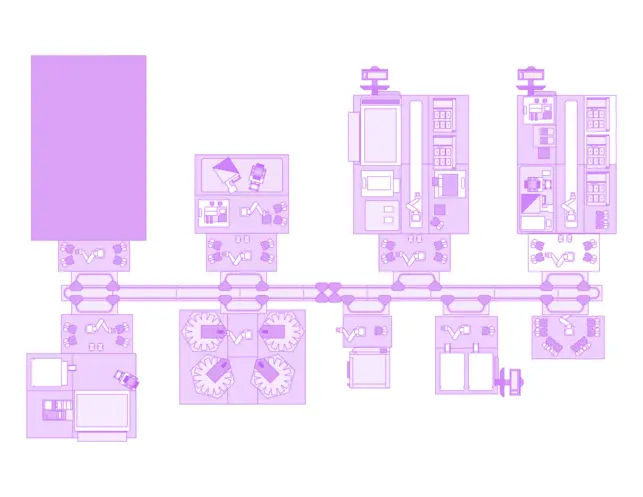
Large workcell
This integrated, track-based automation system supports massively high-throughput genomics workflows by connecting multiple specialized workcells into one cohesive, intelligently scheduled operation. Each workcell is dedicated to a specific phase of the sequencing pipeline, and Green Button Go Orchestrator coordinates movement, timing, and resource allocation across the entire track to ensure uninterrupted, walkaway processing. This architecture delivers end-to-end, future-ready automation for genomics, blending orchestration, traceability, and data intelligence in one unified platform.
Feature details for Hardware
Hardware:
13x Robotic Arm (PAA KX2)
7x Liquid Handlers (5x Agilent Bravo, 2x Hamilton STARlet)
4x Plate Washers (Agilent-BioTek EL405)
2x Extraction Instruments (ThermoFisher KingFisher Flex)
2x Plate Imagers (Agilent-BioTek Synergy HTX)
3x Centrifuge (Bionex HiG3)
1x Chilled Centrifuge (Hettich Rotanta 460)
4x Thermal Cyclers (Inheco ODTC)
3x Plate Peelers (Azenta XPeel)
3x Plate Sealers (Agilent PlateLoc)
3x Capper/Decapper (2x Azenta IntelliXCap 96, 1x Hamilton LabElite ID Capper)
4x Plate Shakers (QINSTRUMENTS Q1)
3x Incubators (LiCONiC STX110 BT)
1x Chilled Tube Storage (Hamilton Storage Verso Q20)
4x High Density Labware Storage (HighRes Biosolutions MicroServe)
33x Plate Storage Hotels
1x Track-Based Transportation System (Rockwell Automation Magnemotion Lite)
Feature details for Software
Integration Software:
9x Green Button Go Scheduler
Green Button Go Orchestrator
Feature details for Hardware
Hardware:
13x Robotic Arm (PAA KX2)
7x Liquid Handlers (5x Agilent Bravo, 2x Hamilton STARlet)
4x Plate Washers (Agilent-BioTek EL405)
2x Extraction Instruments (ThermoFisher KingFisher Flex)
2x Plate Imagers (Agilent-BioTek Synergy HTX)
3x Centrifuge (Bionex HiG3)
1x Chilled Centrifuge (Hettich Rotanta 460)
4x Thermal Cyclers (Inheco ODTC)
3x Plate Peelers (Azenta XPeel)
3x Plate Sealers (Agilent PlateLoc)
3x Capper/Decapper (2x Azenta IntelliXCap 96, 1x Hamilton LabElite ID Capper)
4x Plate Shakers (QINSTRUMENTS Q1)
3x Incubators (LiCONiC STX110 BT)
1x Chilled Tube Storage (Hamilton Storage Verso Q20)
4x High Density Labware Storage (HighRes Biosolutions MicroServe)
33x Plate Storage Hotels
1x Track-Based Transportation System (Rockwell Automation Magnemotion Lite)
Feature details for Software
Integration Software:
9x Green Button Go Scheduler
Green Button Go Orchestrator
Best use cases for bringing in automation
When uniformity is critical
Automation delivers workflow consistency and sample traceability by reducing manual touchpoints
When working over night or on weekends is a regular requirement
Automation unlocks walkaway time for staff so that runs can continue every single hour of the week
High-throughput sequencing and regulated environments
Automation delivers robust, scalable, and audit-ready processes
What to watch out for
Sample tracking and release steps may still require manual review if not integrated with a LIMS
Informatics infrastructure must manage the volume of metadata and intermediate QC points generated by automated prep
Increased usage of labware and tips can require operational changes
Complex library prep protocols may need to be adapted for automation compatability